
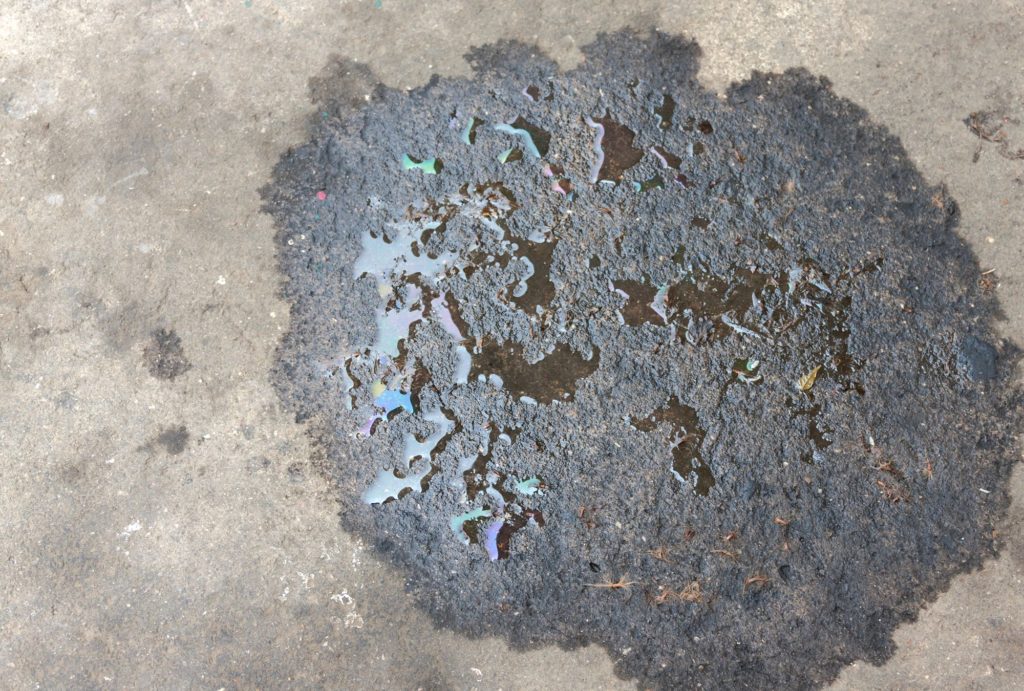
Oil puddlecaused by leakage in the hydraulic system
Hydraulic systems are used in industry and mechanical engineering without them. They transmit enormous forces, work reliably under high loads and enable precise control where other drives quickly reach their limits. However, despite their high performance, they have a known weak point: leaks.
What at first seems like a minor technical problem can become a significant cost factor for companies. considerable cost factor for companies. Just one drop of oil per minute adds up to more than 30 liters of liquid over the course of a year. Multiplied by today's oil prices, possible production losses, environmental regulations and consequential damage, this can quickly add up to sums in the five or even six-figure range.
This article shows how leaks occur, what risks they pose and what measures can be taken to effectively reduce oil losses.
Why leaks are so problematic
Leaks are one of the most common faults in hydraulic systems. They occur in seals, hoses, screw connections or valves - in other words, wherever fluid is under pressure and connections are stressed. It does not matter whether it is a tiny leak or major damage. Both can be expensive in the long term.
The direct costs initially arise from the loss of hydraulic oil. Depending on the size of the system and the fluid used, prices range between three and fifteen euros per liter. But the real problem is hidden: A continuous loss of oil also means a creeping loss of pressure in the system. This leads to inefficient processes, higher energy requirements and increased component wear.
There are also indirect consequences. An unnoticed leak can jeopardize occupational safety if hydraulic oil gets onto floors and causes a risk of slipping. From an ecological perspective, the risk is even more serious: just a few drops of oil are enough to permanently contaminate a square meter of soil. Companies that do not comply with environmental regulations must expect fines, increased cleaning costs and, in the worst case, production shutdowns, more on this under the heading "Costs of leaks".
Causes of leaks
In order to effectively combat leaks in the hydraulic system, it is important to know their typical causes. Problems occur particularly frequently with seals. These are made of rubber or other elastic materials that harden or become brittle over time due to high temperatures, pressure peaks or chemical reactions. Hoses are also subject to heavy loads: They are permanently under pressure, move in flexible applications and are exposed to mechanical impacts. The risk of cracks or material fatigue increases with age.
Another common cause is faulty or incorrectly fitted screw connections. Even a minimal installation error is enough to cause a permanent leak. Blocked or worn valves can also change the pressure in the system in such a way that liquid escapes at an inappropriate point.
The role of the hydraulic fluid itself should also not be underestimated. If it contains dirt particles or water, this accelerates the wear of seals and components - a vicious circle that leads to new leaks. You can find out more about this topic in the blog article "Oil cleanliness in hydraulics".
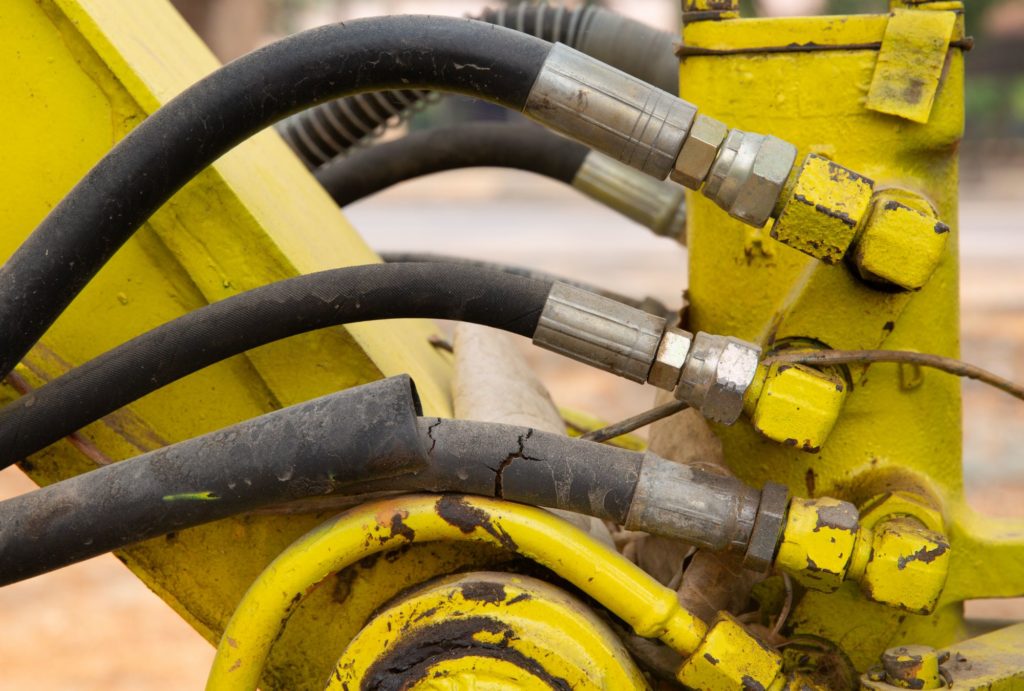
Ailing hydraulic hose on an excavator, clear cracks
Costs of leaks - more than just oil losses
The economic consequences of hydraulic leaks are considerable. The pure loss of oil only accounts for a small proportion of the total costs. The indirect effects are much more serious: Unnoticed leaks lead to energy losses, as the system has to work harder to maintain pressure. The higher energy requirement drives up electricity costs and also has a negative impact on the environmental balance. At the same time, component wear increases, making shorter maintenance intervals and more frequent spare parts purchases necessary.
Production downtime is even more serious. If there is an unexpected standstill, costs can run into five figures per hour - depending on the industry and the production process. Added to this are possible contractual penalties if delivery deadlines are not met.
Finally, legal and ecological consequences also play a role. Companies that do not rectify problems in good time risk violating environmental regulations. Cleaning up contaminated areas or even groundwater damage quickly results in six-figure costs and can cause lasting damage to a company's image.
Prevention: How to minimize oil losses
The good news is that most hydraulic leaks can be prevented or at least detected at an early stage with the right measures. The most important step is consistent preventive maintenance. Regular visual inspections, pressure tests and oil samples help to identify critical conditions before major damage occurs. Particular attention should be paid to the condition of hoses and seals. These components have a limited service life and must be replaced in good time. Companies that use high-quality materials and adhere to clear replacement intervals significantly reduce their risk.
The quality of the hydraulic fluid also plays a decisive role. Clean oil protects seals and components, while impurities such as particles or water lead to increased wear. Regular oil changes in accordance with the manufacturer's specifications and reliable filtration make a significant contribution to preventing leaks. Digitalization also offers new possibilities. Modern systems have sensors that measure the pressure, temperature and oil level permanently. Deviations are registered immediately so that problems can be detected and rectified at an early stage. Condition monitoring and predictive maintenance are the buzzwords here, which not only save costs in the long term, but also increase the availability of the systems.
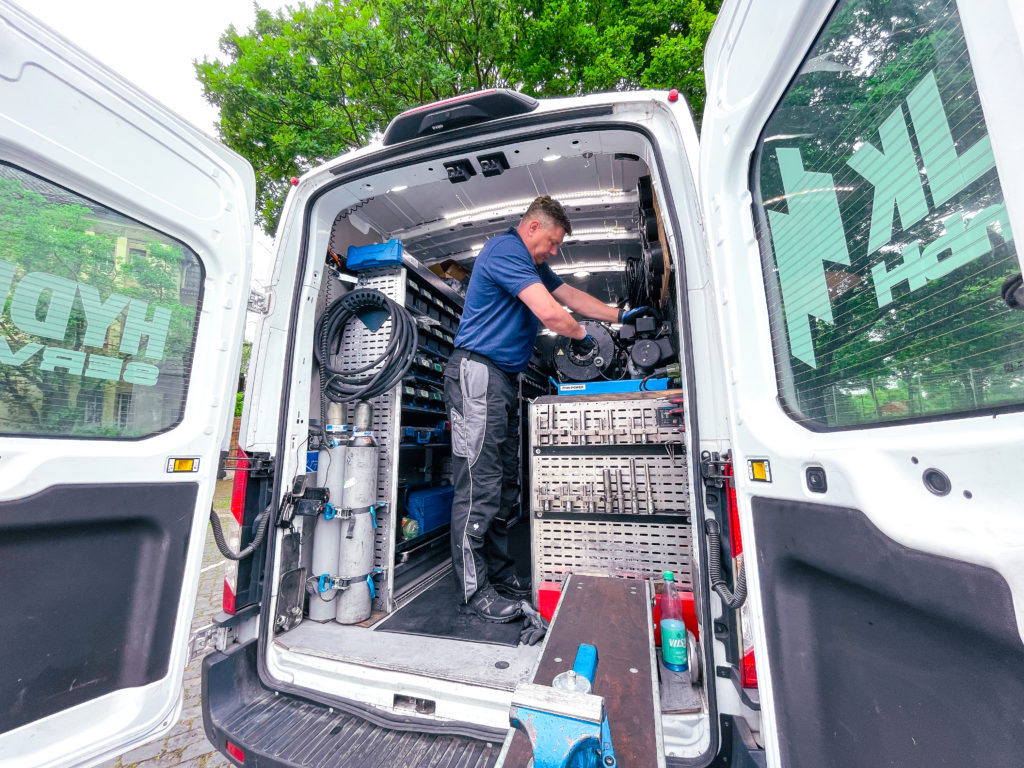
HBT GROUP service vehicle
Immediate measures in the event of leaks
If a leak occurs, quick action is required. First of all, the cause must be localized. UV additives in the oil or electronic leakage detectors, which make even the smallest leaks visible, can help here. Temporary repairs such as sealing tapes or temporary seals are possible, but are no substitute for a permanent solution.
It is important that defective components are replaced promptly and the cause rectified. If it remains an emergency solution, the problem usually worsens within a short time and the follow-up costs increase. The HBT GROUP supports you competently and quickly in localizing the causes and taking remedial action.
Conclusion
Leaks in hydraulic systems are more than just a technical nuisance. They pollute the environment, cause high costs and jeopardize operational safety. At the same time, they are avoidable in most cases if maintenance, monitoring and timely replacement are implemented consistently. Companies that invest in preventive measures not only save money in the long term, but also extend the service life of their systems and strengthen their sustainability balance.
The HBT GROUP supports you as an experienced partner in the analysis, maintenance and repair of your hydraulic systems. With our expertise in hydraulics, we ensure that leaks do not occur in the first place or are repaired quickly and reliably. In this way, you ensure the efficiency of your systems, reduce costs and at the same time make a contribution to environmental protection.
Are you looking for a competent partner for your hydraulic solutions? Feel free to contact us and benefit from our many years of experience.