
In hydraulic systems, oil is more than just an operating fluid - it is the key functional component. But as powerful as a hydraulic system may be, its reliability stands and falls with the cleanliness of the oil used. cleanliness of the oil used. Contamination in hydraulic oil is one of the most common causes of breakdowns, malfunctions and unnecessarily high maintenance costs. Anyone who is familiar with oil cleanliness and cleanliness classes lays the foundation for longer service life, lower follow-up costs and maximum operational reliability.
In this article you will find out:
- Which purity classes exist and what they mean
- Which damage can occur if the cleanliness of the oil used is neglected
- With which costs can be expected for analysis and filtration
- Which measures contribute to compliance with oil cleanliness
What does "oil purity" mean in hydraulics?
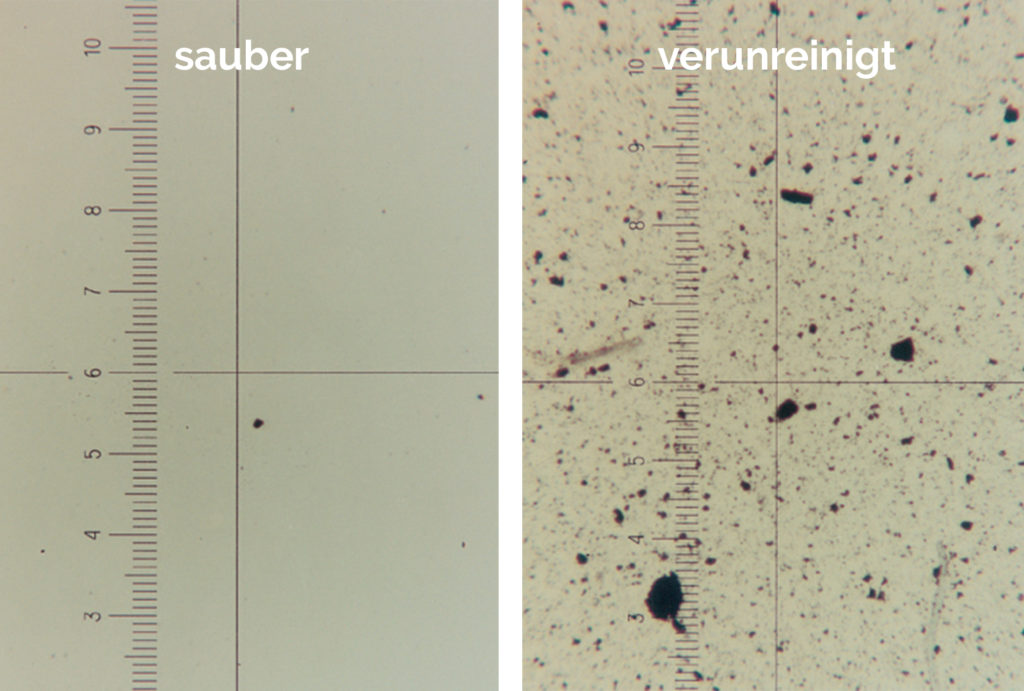
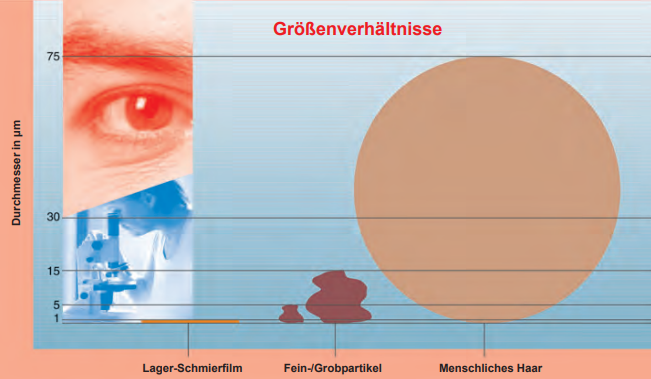
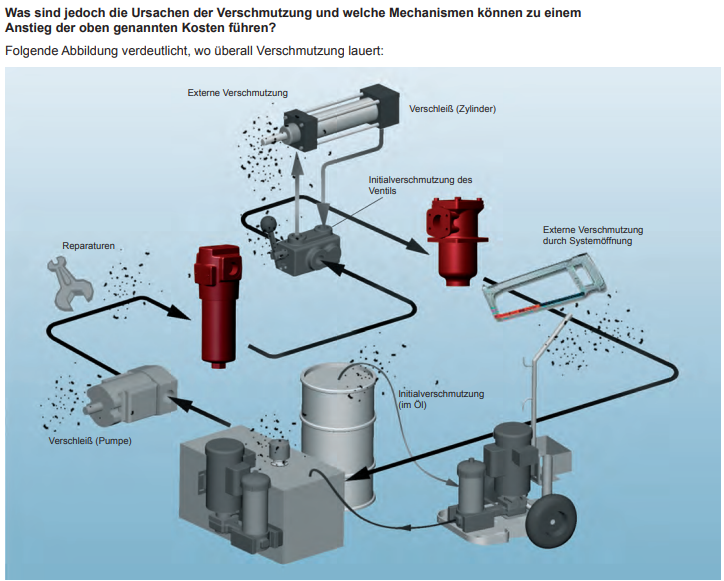
Hydraulic oil is exposed to constant wear and external influences during its use. Over time, solid particles solid particles, water, air bubbles or chemical residues into the system. These oil impurities impair lubricity, lead to seal wear and can directly destroy sensitive components such as servo valves. servo valves directly.
Oil cleanliness In hydraulics, oil cleanliness describes the degree of contamination of an oil - usually measured by the number of particles in micrometers. particles in micrometers in different orders of magnitude.
The ISO purity classes according to ISO 4406
The international standard ISO 4406 defines a three-stage classification system that describes the number of particles >4 µm, >6 µm and >14 µm in a given oil sample.
Example:
Purity class ISO 18/16/13
- 18 = 1300 to 2500 particles >4 µm per 100ml
- 16 = 320 to 640 particles >6 µm per 100ml
- 13 = 40 to 80 particles >14 µm per 100ml
The lower the numbers, the higher the cleanliness of the oil.
In many applications - e.g. in mobile hydraulics, industrial plants or aviation - much stricter values are required today, such as ISO 16/14/11 or better.
Consequences of poor oil cleanliness: When dirt becomes the cause of damage
The effects of impurities in the oil in hydraulics are serious. Even the smallest particles can cause enormous damage over years:
- Increased wear on pumps, valves and cylinders
- Power losses due to blockages or increased friction
- Failure of control and regulating valvesespecially in fragile systems
- Reduced service life of seals and bearings
- Downtimes of machines due to unexpected repairs or oil changes
- Gradual loss of performancethat are difficult to diagnose
Studies show that up to 80 % of all hydraulic failures are due to oil contamination. cleanliness is therefore a decisive factor for the productivity of hydraulic systems.
Measures to ensure the cleanliness of hydraulic oil
Professional fluid management is the key to oil cleanliness. This includes:
- Initial commissioning only with filtered oil
- Regular oil samples to determine the cleanliness class (e.g. with a particle counter)
- High-quality filter technology (filters such as line filters, bypass filters, offline filter systems)
- Systematic maintenanceincluding hose and seal management
- Avoidance of contamination during oil changes or maintenance work
- Training of employees in handling hydraulic systems
Well thought-out storage and handling of hydraulic oils is crucial to prevent contamination from entering the system in the first place.
What does professional oil analysis and cleaning cost?
The costs for an oil analysis by a certified expert range between 50 and 150 Euro. Not only the number of particles (ISO 4406) is examined, but often also the water content, viscosity or chemical ageing. We offer oil analyses and condition monitoring as part of our hydraulics service - please contact us. In a personal meeting, we will clarify the individual requirements for your systems together in order to provide you with a suitable offer.
For the Filtration of hydraulic oil (e.g. during commissioning or oil maintenance) mobile filters can be used. In relation to the possible follow-up costs, these measures cost a small amountwhich is often already amortized by one avoided repair amortized.
Conclusion: Clean oil saves money
Compliance with the correct cleanliness classes according to ISO 4406 in hydraulics is not an option, but a technical technical necessity. Contamination in hydraulic oil is an insidious risk with enormous damage potential for your machines. Regular testing, filtering and training not only extends the service life of your systems - it also protects your budget.
The HBT GROUP supports companies with individual solutions for all aspects of oil cleanliness and fluid management in hydraulics - from professional analysis and filtration of hydraulic oil, condition monitoring and regular inspections in accordance with DGUV (German Social Accident Insurance) to a comprehensive hydraulics service.
Do you have questions about oil samples, the cleanliness class or would you like to have your system professionally checked?