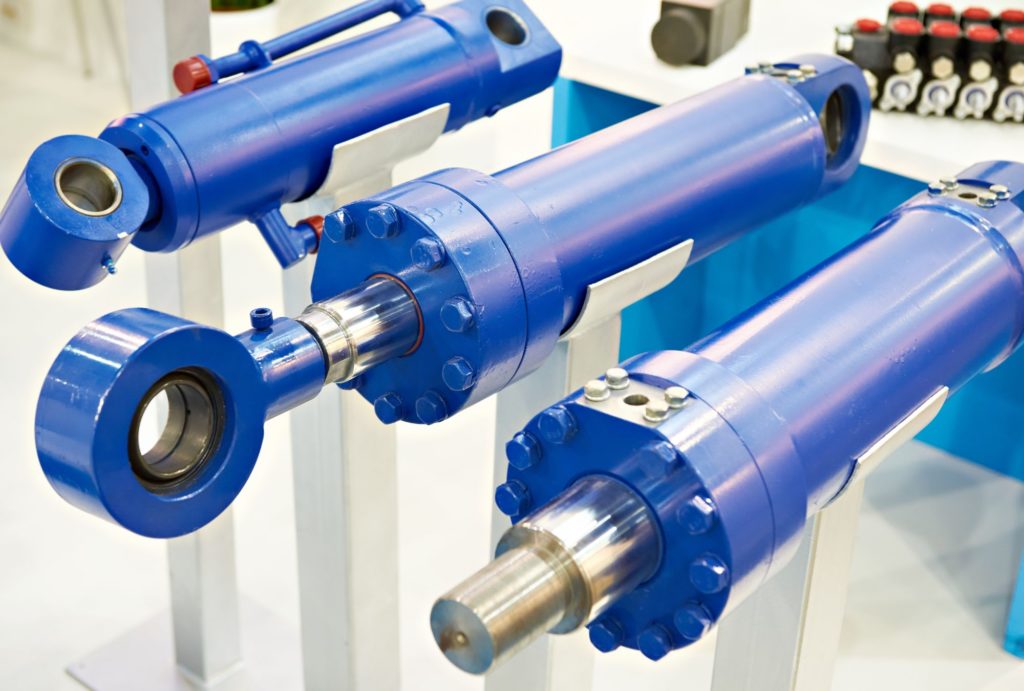
Hydraulic cylinders as good as new
Hydraulic systems have been a mainstay of industry and mechanical engineering for decades. Whether in construction machinery, production facilities, agricultural equipment, conveyor systems or power generation - hydraulics are used wherever large forces need to be transmitted with precision. Their robustness, reliability and performance make them indispensable. At the same time, companies today are facing a new challenge: sustainability, energy efficiency and environmental protection are no longer just buzzwords, but decisive factors for competitiveness and long-term success. This brings to the fore the question of how sustainable hydraulics actually are and what solutions are available to ensure their future viability.
Hydraulics in the field of tension between efficiency and criticism
Traditional hydraulic systems are often criticized because they consume large amounts of energy, cause oil losses and entail high maintenance costs. A considerable amount of the energy consumed is wasted in the form of throttling losses caused by the build-up of pressure without it actually being used. The use of mineral oil-based hydraulic fluids is also problematic from an ecological point of view, as they are difficult to break down if disposed of incorrectly. In addition, there are leaks that not only drive up operating costs, but in the worst case can also pollute the environment and groundwater. In addition, many pumps cause disturbing noises and thus pollute the working environment.
Despite these weak points, hydraulics remain indispensable for many applications. In areas where extreme forces have to be transmitted, alternative drives quickly reach their limits. That is why the focus is not on replacing hydraulics, but on developing them further towards greater efficiency and sustainability.
Advances in pumps and drives
One key to improving energy efficiency lies in the further development of pump technology. While classic fixed displacement pumps operate permanently at high performance regardless of actual demand, modern variable displacement pumps enable demand-based pumping. This means that only as much energy is supplied as is actually required. In many cases, a loadsensing-system ensures that the pressure and flow rate are automatically adapted to the respective situation. Frequency-controlled drives, in which the speed of the electric motor is varied flexibly, go one step further. This technology makes it possible to significantly lower energy requirements and reduce heat losses in the oil. In practice, savings of 30 to 70 percent can be achieved, which not only improves the CO₂ balance, but also significantly reduces operating costs.
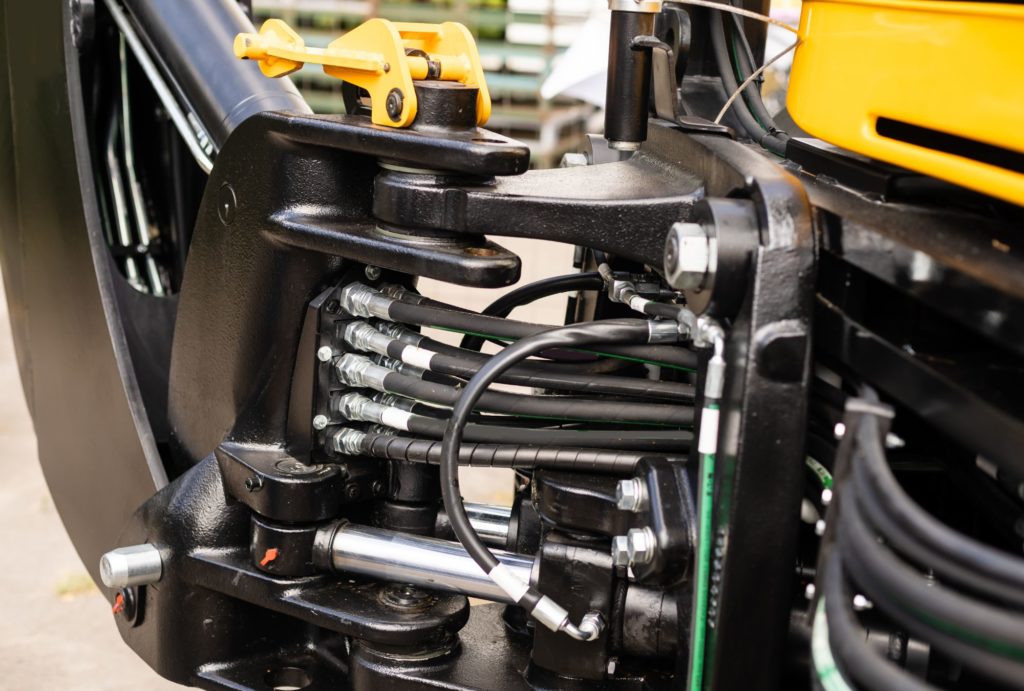
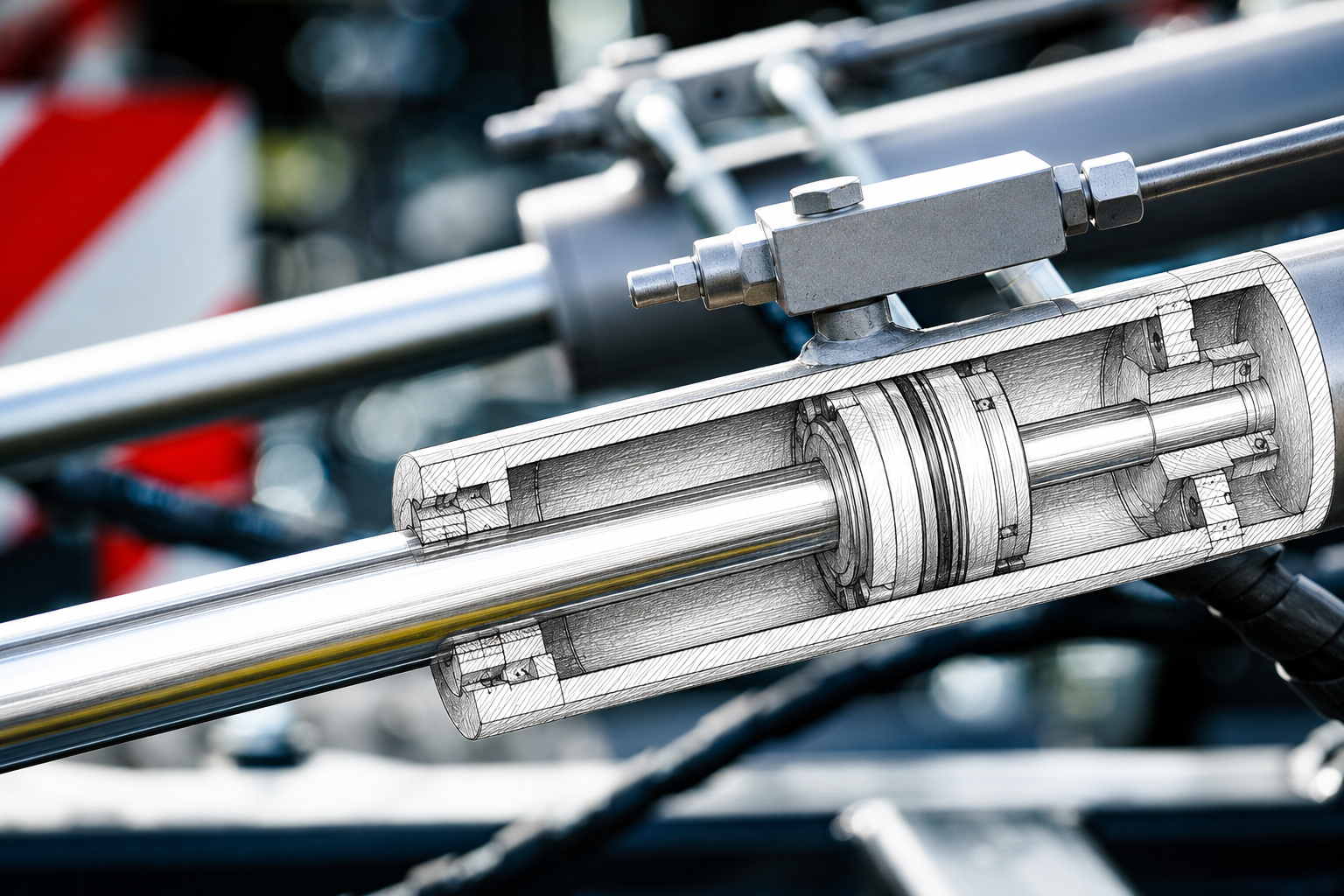
Modern Hydraulic system of an agricultural machine
Digitalization as a driver for sustainability
In addition to hardware, digitalization also makes a decisive contribution to sustainability. Sensor technology and intelligent control systems allow detailed monitoring of the systems. Parameters such as pressure, temperature, oil purity and vibrations can be recorded in real time. This allows operation to be controlled in such a way that the hydraulic systems work at optimum efficiency at all times. At the same time, digital systems enable predictive maintenance. Instead of reacting to faults, operators can intervene at an early stage if sensors detect wear, contamination or impending leaks. This not only reduces the risk of unplanned downtime, but also the consumption of resources, as components can be used for longer.
A practical example illustrates the benefits: In a production plant with several hydraulic presses, condition monitoring made it possible to detect at an early stage that the oil temperature regularly exceeded the target range. Without this digital monitoring, seals and pumps would probably have failed after a short time. With timely measures, the damage could be avoided and energy efficiency improved at the same time.
Sustainable hydraulic fluids
Significant progress has also been made in the field of hydraulic fluids. Mineral oil-based products are still widely used, but they pose a risk to the environment and soil in the event of leaks. Modern alternatives such as biodegradable ester oils degrade much faster and therefore offer greater safety in ecologically sensitive areas such as forestry or hydropower plants. Water-based fluids are particularly interesting where fire protection is a priority, as they are not flammable, unlike oil. Synthetic special oils are also being developed, which remain usable for much longer and thus extend the change intervals. Fewer oil changes meann for companies not only less costs, but also less waste and less consumption of resources.
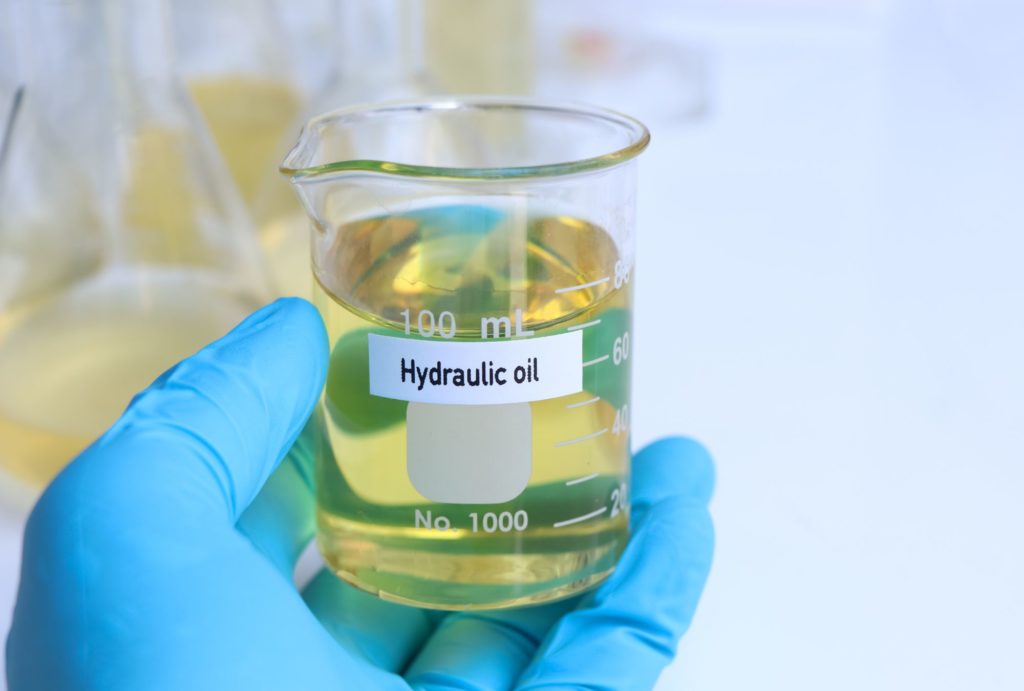
Hydraulic oil in laboratory glassware
Circular economy and life cycle thinking
However, sustainability not only covers ongoing operation, but also the entire service life of the systems. Many hydraulic components are made of high-quality metals, a large proportion of which can be recycled. Remanufacturing processes are also becoming increasingly popular. remanufacturingis also becoming increasingly important. This involves reconditioning used pumps, valves or cylinders and returning them to as-new condition. This procedure not only saves raw materials, but also significantly reduces production costs. Even in the case of hydraulic hoses, which were long considered difficult to recycle, new processes are being developed that allow rubber and metal components to be separated and reused.
Hybrid and electric solutions
Another way to more sustainability lies in the combination of hydraulic and electric drives. Electrohydraulic systems combine the power of hydraulics with the precision and efficiency of electric drives. Hybrid excavators are already being used in the construction machinery industry, which store energy when the arm is lowered and release it again when it is raised. released again when the arm is raised. In industry, too, electro-hydraulic drives enable pressing forces to be precisely metered without constantly using large amounts of energy. In wind turbines, hybrid systems help to optimally align the rotor blades and save energy at the same time. These developments show that hydraulics and electrics are not opposites, but complement each other effectively can complement each other effectively. You can find out more about this topic in the blog article "Hydraulics versus electromechanics"
Sustainability as an economic success factor
Sustainable solutions in hydraulics are no longer just an ecological issue, but also a decisive competitive factor. Energy efficiency reduces ongoing operating costs, compliance with environmental regulations avoids penalties and damage to a company's image, and sustainability reports based on ESG criteria are becoming increasingly important for investors and partners. Companies that modernize their hydraulic systems not only improve their profitability, but also strengthen their position on the market. One automotive supplier, for example, was able to reduce its energy consumption by 40 percent by using frequency-controlled pumps and the investment paid for itself in less than three years.
Conclusion: Hydraulics also works sustainably
Hydraulics is at a turning point today. For a long time, it was considered energy-guzzling and environmentally harmful, but modern technologies show that it can also be sustainable. New pump systems reduce energy requirements, digital solutions make systems more transparent and durable, alternative hydraulic fluids reduce environmental pollution and concepts such as recycling and hybrid solutions strengthen the responsible use of resources.
In summary, this means that hydraulics and sustainability are not mutually exclusive, but can complement each other. It is crucial that companies regularly check and modernize their systems and adapt them to current standards. As an experienced partner, the HBT GROUP supports you with comprehensive know-how - from analysis and optimization to maintenance and repair of your hydraulic systems. This ensures that your systems are not only powerful, but also future-proof, energy-efficient and environmentally friendly.
Are you looking for a competent partner for your hydraulic solutions? Feel free to contact us and benefit from our many years of experience.