
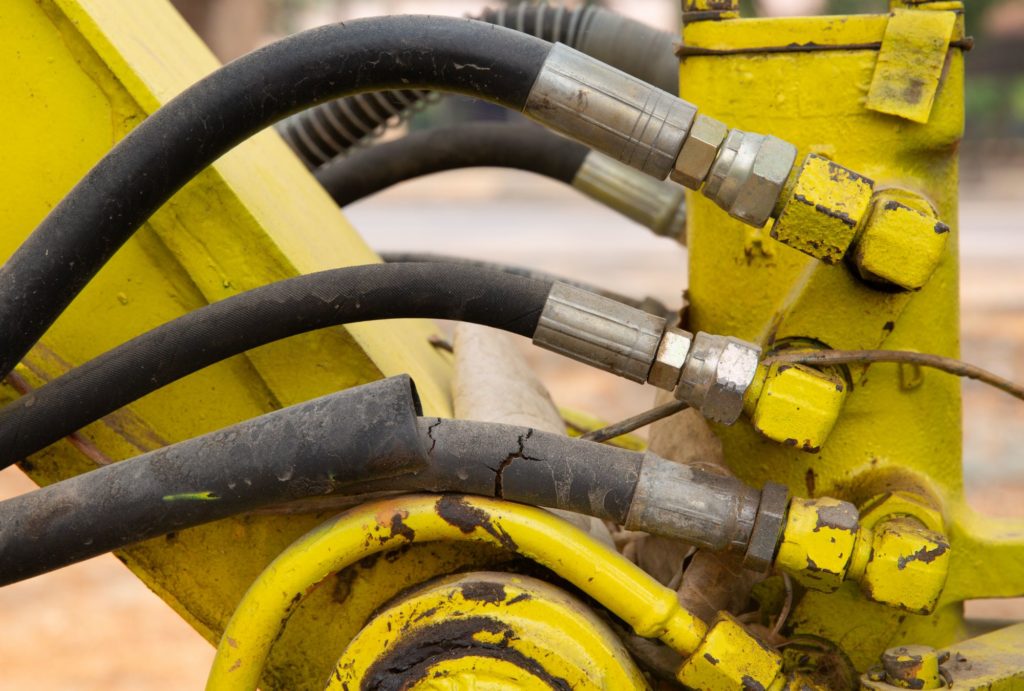
Broken hydraulic hose on an excavator
Hydraulic systems are the backbone of countless industries - whether in production, mechanical engineering, agriculture, transportation or power generation. They move components with forces weighing tons, control precise work processes and often run around the clock under high loads. However, it is precisely this constant strain that has a disadvantage: small errors or omissions can develop into massive problems in a very short space of time.
An inconspicuous particle in the hydraulic oil can halve the service life of a pump. An undetected leak can not only waste several liters of expensive hydraulic fluid a day, but also violate environmental regulations. And in the worst-case scenario, neglected maintenance can cause a complete production standstill - with costs quickly reaching five figures per hour. Every year, such errors in industry worldwide add up to billions in damage. For individual companies, breakdowns and repairs can quickly cost 50,000, 100,000 or even several hundred thousand euros if not only the repair but also the loss of production, contractual penalties or urgent procurement have to be factored in.
The good news is that most of these costly hydraulic faults are preventable. The following five hydraulic faults are among the most costly and if you are aware of them, you can take targeted countermeasures.
1. impurities in the hydraulic fluid
Hydraulic fluid is the "blood" of every system. But just like a human body, contamination quickly leads to malfunctions. Even particles in the range of 5-10 micrometers - invisible to the human eye - can block high-precision valves or lead to abrasive wear on pumps and cylinders.
Contamination occurs in many ways: through unclean refilling, damaged seals, worn components or even new components that have not been properly flushed. Water and air are also dangerous: water reduces lubricity and can cause corrosion, while air bubbles lead to cavitation, vibrations and massive performance losses.
Possible consequences:
- Replacement of a damaged pump: 5.000-20.000 €
- Replacement of several valves and cylinders after contamination: 20.000-50.000 €
- production loss per day in the industry: up to € 250,000
Prevention: High-quality filtration systems, regular oil samples, careful flushing of new components and consistent adherence to cleanliness classes in accordance with ISO 4406 to avoid such faults. You can find more information on the subject of oil cleanliness in the corresponding technical article.
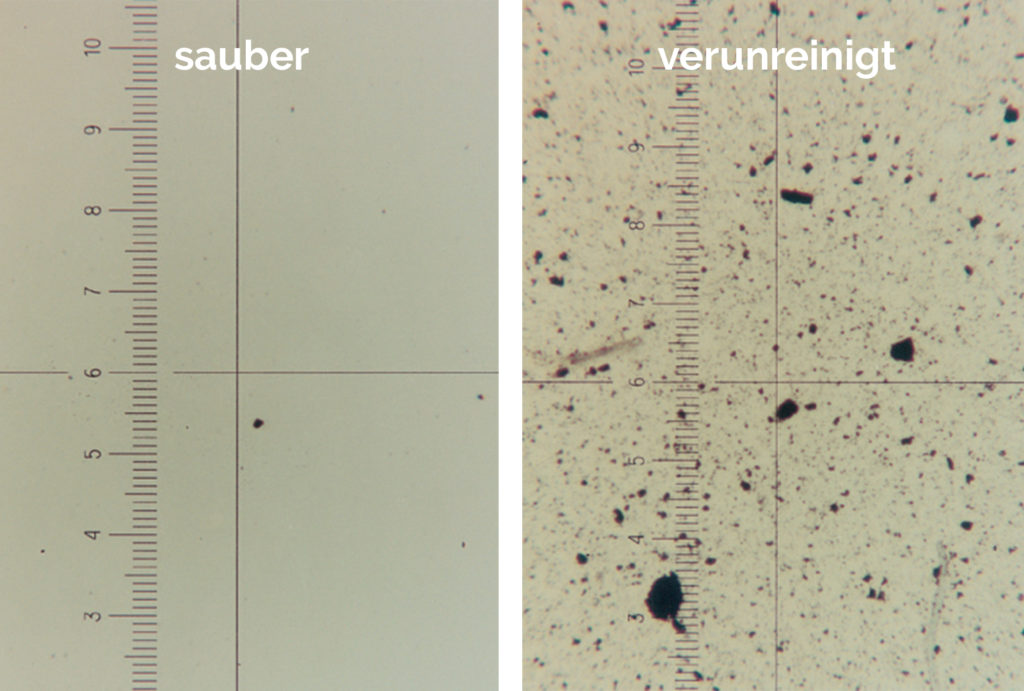
Clean and contaminated hydraulic oil
2. temperature problems
Hydraulic systems operate optimally within a precisely defined temperature range, often between 40 and 60 degrees Celsius (depending on the type of oil). Deviations of just a few degrees can have noticeable consequences:
- Excessively high temperatures accelerate the chemical degradation of the oil, increase oxidation and reduce the lubricating effect. Seals become hard and brittle, resulting in leaks.
- Temperatures that are too low lead to excessive viscosity, which means that pumps require more energy and components are subjected to greater stress.
Common causes are clogged or dirty heat exchangers, faulty thermostats, incorrectly dimensioned cooling circuits or simply a lack of monitoring.
Possible consequences:
- Oil change due to thermal decomposition: 3.000-10.000 € (incl. disposal and refilling of large systems)
- Renewal of several seals: 5.000-15.000 €
- Total failure of a pump due to cavitation: up to 20.000 €
Prevention: Temperature monitoring with alarm function, regular inspection of cooling and heating systems, compliance with oil specifications, dimensioned coolers for peak loads to avoid costly faults.
3. use of the wrong hydraulic fluid
The hydraulic fluid not only determines how well a system lubricates, but also how well it dissipates heat, prevents corrosion and protects components. The wrong choice - whether in terms of viscosity, additive package or chemical composition - can dramatically shorten the service life of components. Using the correct fluid in hydraulics is therefore essential.
Mixtures of different types of oil are particularly dangerous: Different additives can react with each other, form deposits or even lead to foaming. The use of "cheap" oils that do not comply with the manufacturer's specifications also saves costs in the short term, but often causes long-term damage.
Possible consequences:
- Damage to seals and hoses: 5.000-12.000 €
- Complete replacement of the hydraulic oil: 10.000-30.000 €
- Failure of machines over several days: up to 500,000 € for production systems with high unit costs
Prevention: Only use fluids that comply with the manufacturer's approvals, do not mix different types of oil, document oil change schedules and thus avoid unnecessary errors.
4. leaks - the invisible cost eater
Leaks are one of the most common but most underestimated problems. A leak that only one drop per minute per minute adds up to over 30 liters of hydraulic oil. In addition to the pure material costs (hydraulic oil can cost between €3 and €15 per liter), there are also environmental regulations, cleaning measures and energy losses.
Leaks can occur in hoses, seals, connections or valves and often go unnoticed for a long time because the amount of dripping is initially small. However, even small leaks lead to pressure losses that reduce efficiency and make the system work harder.
Possible consequences:
- Oil loss and refilling: 3.000-10.000 € per year
- Cleaning and disposal in the event of environmental damage: 10.000-100.000 €
- Production downtime in the event of serious damage: up to 200,000 €
Prevention: Regular visual and pressure checks, use of leakage detectors, timely replacement of hoses and seals. Companies that act early can avoid these errors and save considerable sums of money.
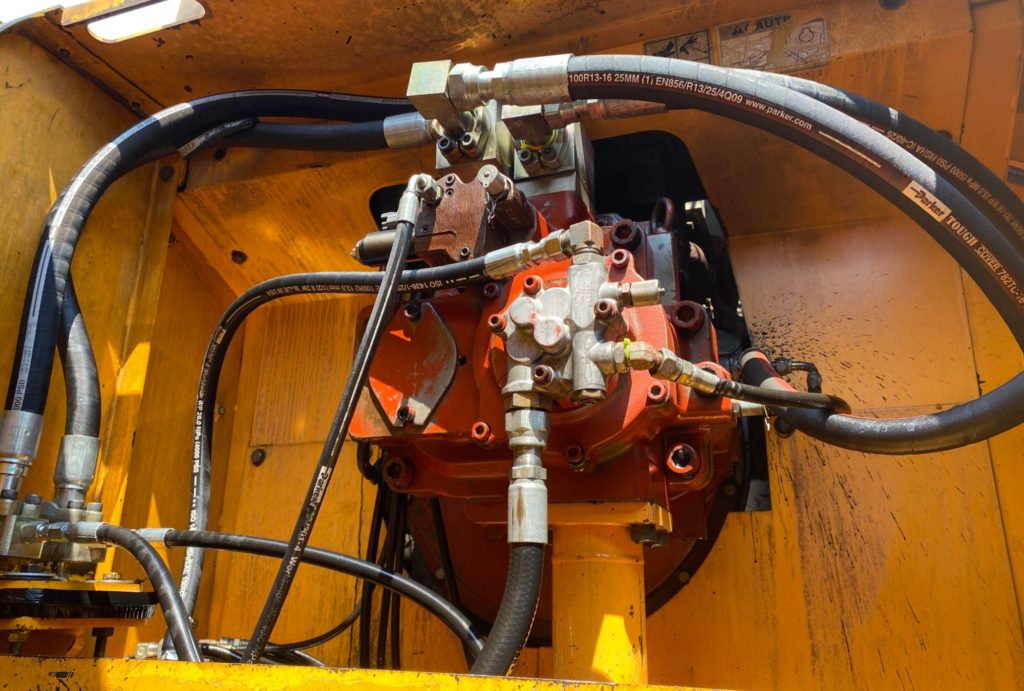
Leaking hydraulic system
5. lack of or inadequate maintenance - the most expensive cost-saving measure
Hydraulic systems consist of many precisely coordinated components. Without regular maintenance, wear increases exponentially and small problems remain undetected until they lead to major damage to the system. "Repair after failure" instead of preventive maintenance is particularly dangerous. While preventive measures can be planned and are cost-effective, an unplanned shutdown usually comes with a vengeance - including expensive urgent repairs, overtime surcharges, express deliveries of spare parts and production downtime.
Possible consequences:
- Planned replacement of a pump as part of maintenance: 5.000-8.000 €
- Unplanned pump failure incl. downtime costs: 50.000-150.000 €
- Complete failure of a production line: up to €1 million per week in highly specialized industries
Prevention: Adhere to specified maintenance intervals, document all steps, carry out oil and filter changes according to schedule, use condition monitoring. In this way, these faults can be safely avoided.
Conclusion
The biggest costs in hydraulics are rarely caused by material alone, but by the combination of repair, spare parts procurement, production downtime and consequential damage. Avoiding the errors mentioned above not only reduces maintenance costs, but also increases the productivity and reliability of your systems.
Note: The costs for maintenance, repair, downtimes, etc. listed in the text are based on experience. They serve only as a guide and are in no way binding.
The HBT GROUP supports you as an experienced partner in hydraulics in all matters relating to hydraulic systems - from precise analysis and maintenance to fast repairs. With our expertise, we ensure that your systems work reliably, efficiently and faultlessly and protect you from costly hydraulic faults.
Are you looking for a competent partner for your hydraulic solutions? Feel free to contact us and benefit from our many years of experience.