
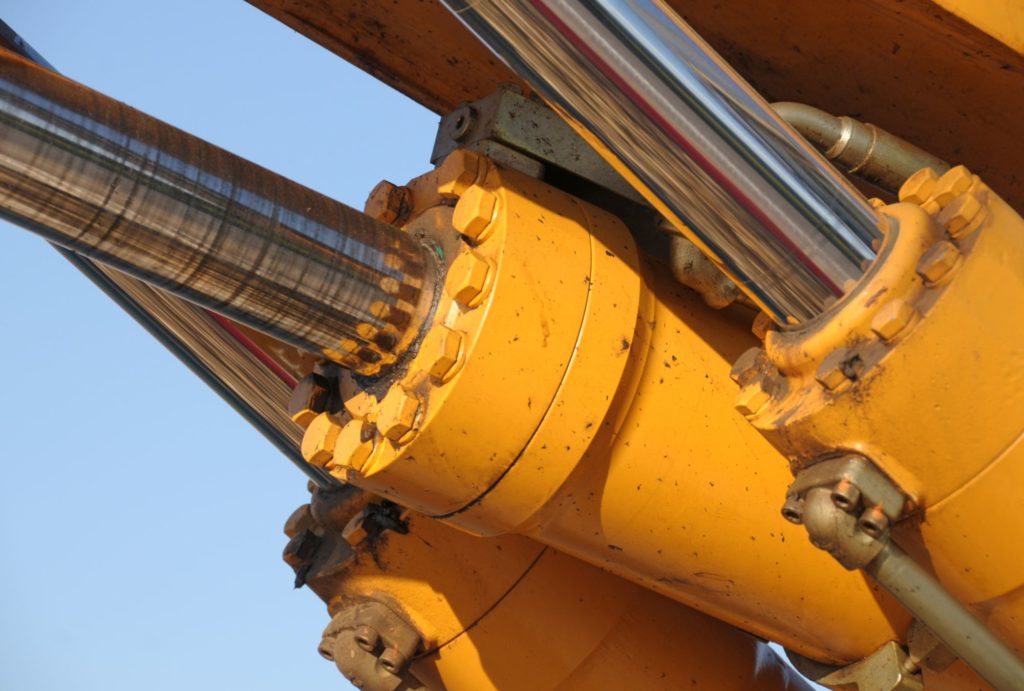
Hydraulic cylinder of an excavator
Precision, power and reliability - these are the keywords that best describe modern hydraulic systems. But how do hydraulics actually work in detail? In this technical article, we explain how the power transmission with oil workswhich physical principles behind it, which components are indispensable and how hydraulic systems are used in practice.
What is meant by hydraulics?
Hydraulics is a branch of fluid technology and deals with the transmission of energy through fluids - usually with special hydraulic oils. The underlying idea is simple but effective: pressurized fluid can be used to transmit forces, generate or control movements and control machines with high precision.
Hydraulics offer decisive advantages over other types of drive. Where electric drives reach their physical limits and pneumatic systems are too imprecise, hydraulics come into their own: They can generate enormous forces, meter them finely and control them safely - all with a comparatively compact design. You can find detailed information on this in our technical article on hydraulics versus electromechanics.
The physical basis: pressure generates force
How do hydraulics work from a physical point of view? The basic principle is based on Pascal's law. This physical law states that pressure exerted in a sealed liquid spreads evenly in all directions. This property makes liquids - in contrast to gases - excellent media for power transmission.
In practice, this means that if pressure is generated at one point in a closed hydraulic system, e.g. by a pump, this pressure has the same effect everywhere. The actual force generated at a cylinder or motor is the product of pressure and area (F = p × A). This makes it possible to generate large forces with little effort - ideal for lifting systems, presses or control elements.
The main components of a hydraulic system
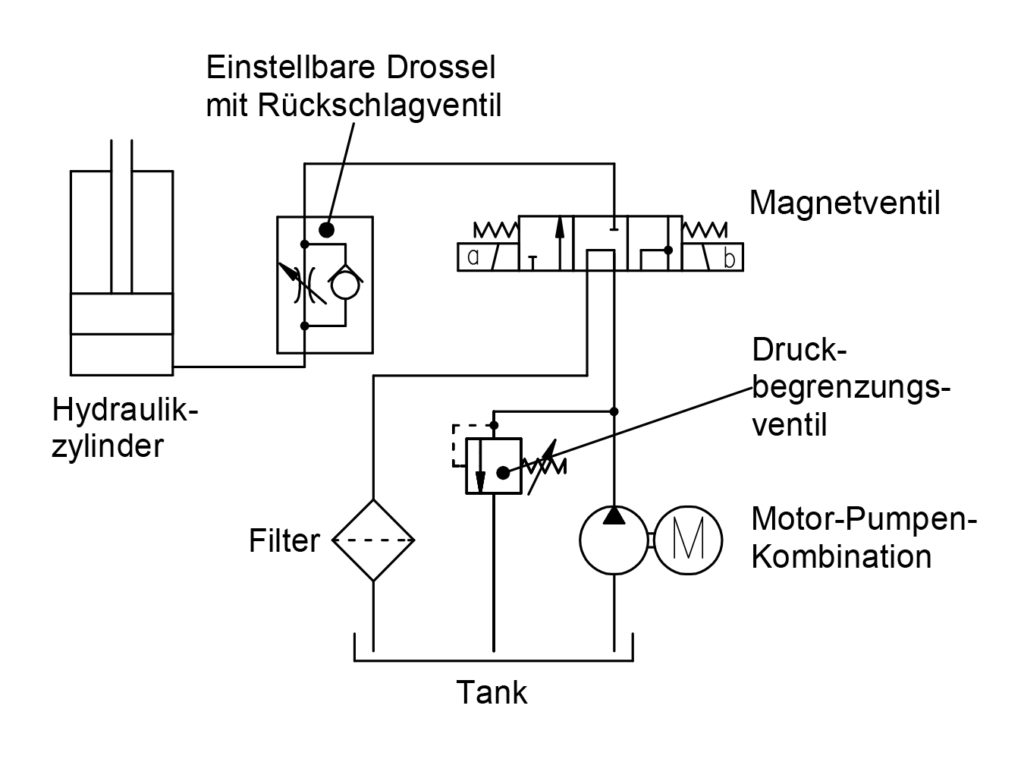
A functioning hydraulic system is made up of several precisely coordinated components. Each of these components fulfills a central task and contributes to the performance of the overall system.
The hydraulic pump forms the heart of the system. It draws the fluid used for operation from the tank and feeds it into the circuit under pressure. Different pump types are used depending on the application. Gear pumps are considered to be particularly robust and simple in design, while axial piston pumps enable a variable flow rate and are primarily used in systems with changing load profiles. Vane pumps are characterized by particularly quiet running and are suitable for noise-sensitive applications.
Valves are used to control the oil movement. A distinction is made between pressure valves, which for example limit the maximum pressure in the system, directional control valves, which control the flow direction of the oil, and flow control valves, which can be used to precisely regulate the flow rate and therefore also the speed of movement.
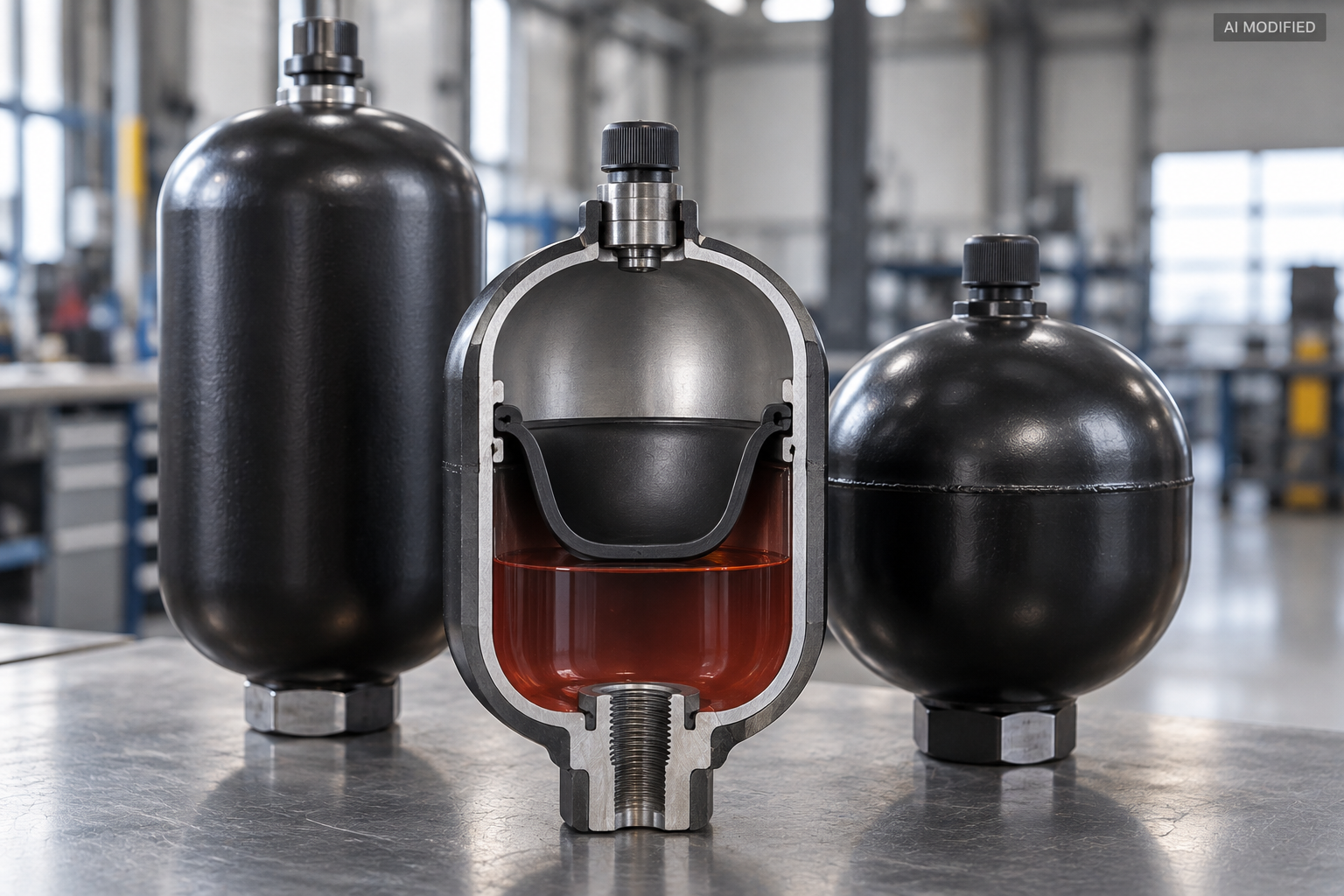
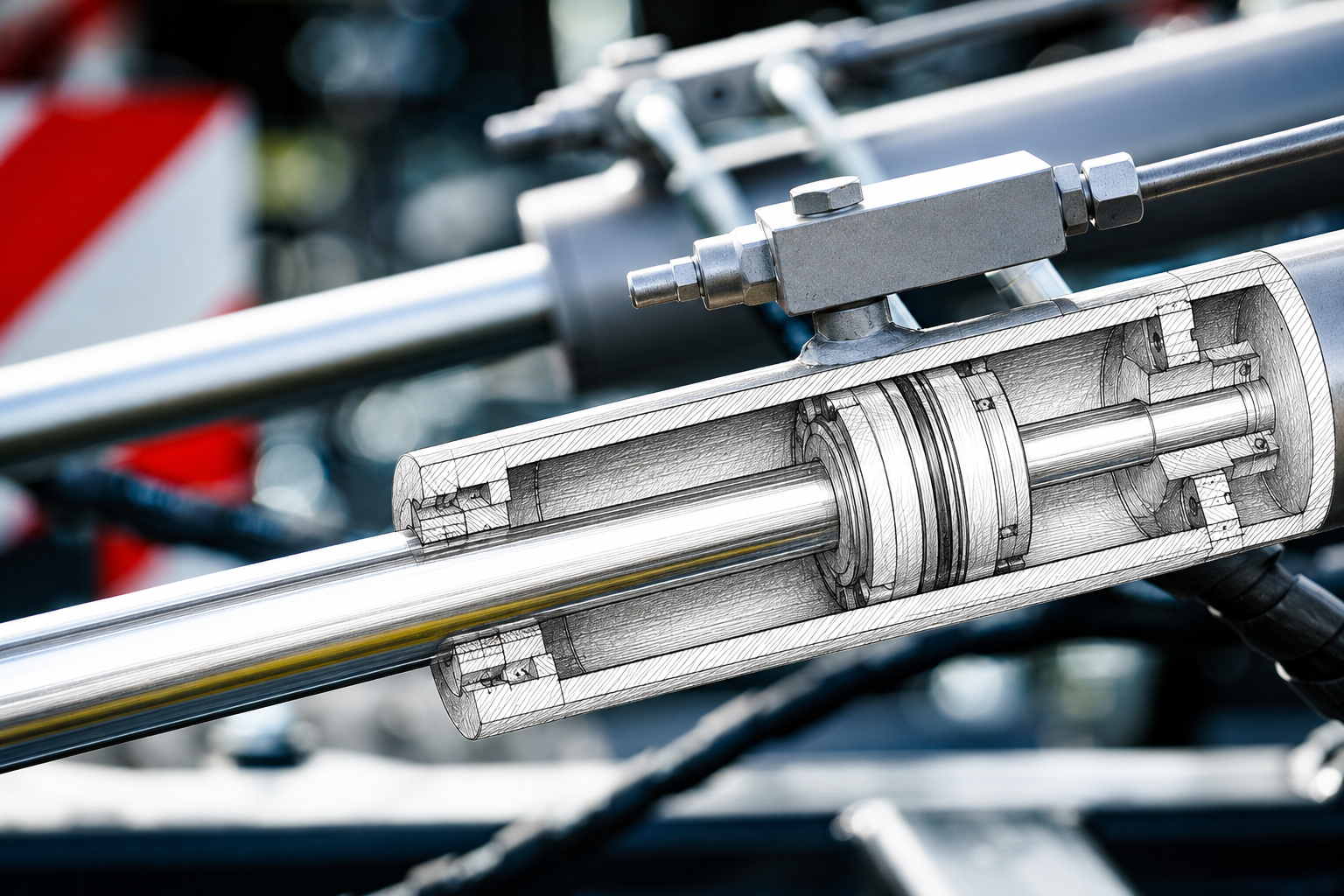
Hydraulic cylinders and motors are the actuators in the hydraulic system. While cylinders generate a linear movement (e.g. for lifting and lowering), hydraulic motors generate a rotating movement. They convert the energy stored in the fluid into mechanical work.
The hydraulic tank not only serves as a reservoir for the oil, but also fulfills other important functions. It enables the oil to be degassed, helps regulate the temperature and provides space for the sedimentation of dirt particles.
Filters are essential to ensure that hydraulic systems function reliably in the long term. They protect all components from particles that can enter the system through abrasion, contamination or oil ageing.
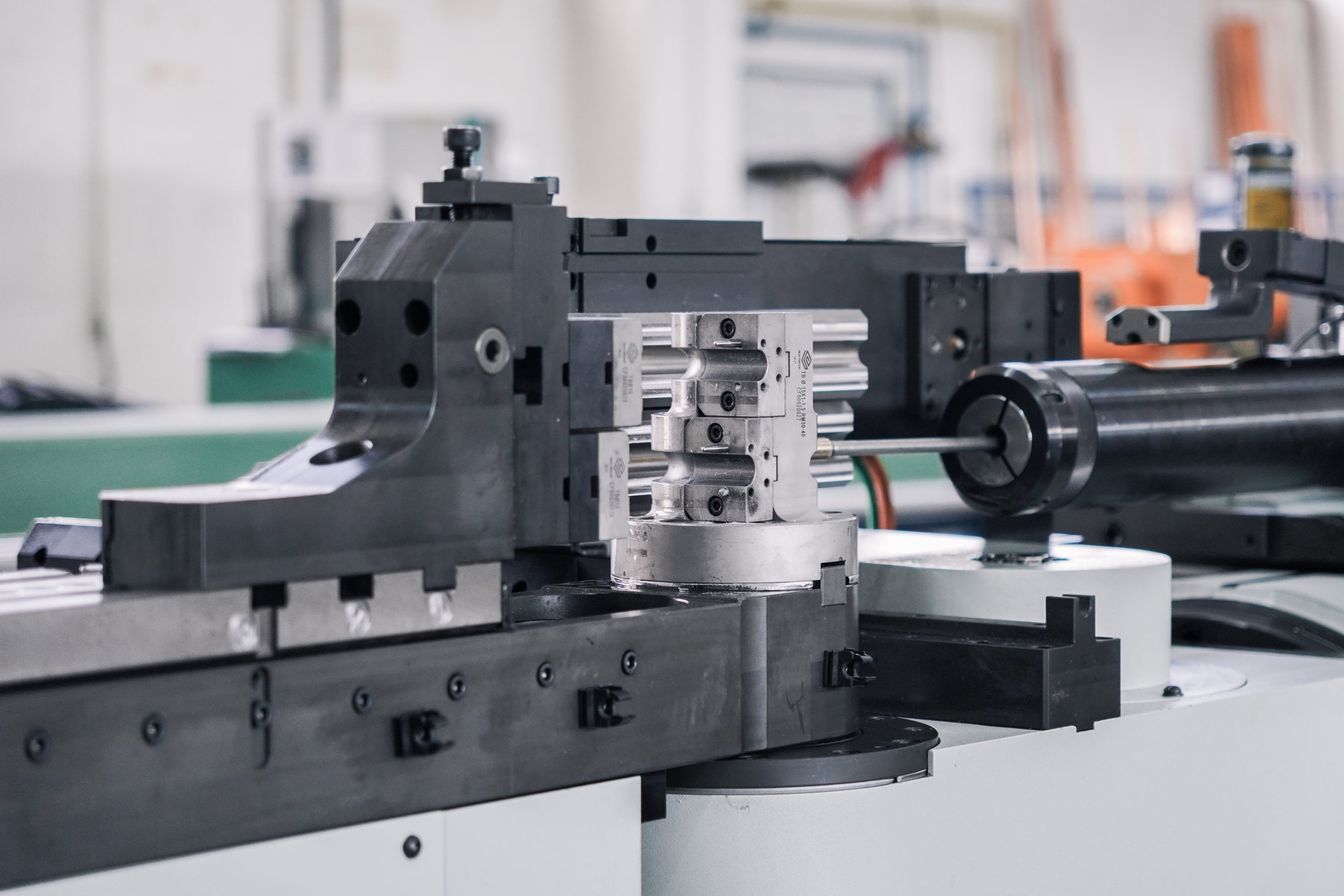
Finally, hydraulic pipes, hoses and connecting elements ensure that the fluid is transported safely between the individual hydraulic components. They must be vibration-resistant and resistant to temperature fluctuations, media and high pressure.
Hydraulic oil: the carrier of energy
Hydraulic oil is much more than a simple operating fluid, it is the central element for energy transmission in the system. It not only transports pressure, but also lubricates the moving components, cools the system by dissipating heat and protects internal surfaces from corrosion.
A suitable hydraulic oil must therefore fulfill a variety of requirements: Particularly important are a constant viscosity over a wide temperature range, high ageing stability, good air separation capacity and the ability to repel or absorb water, depending on the system requirements. In addition, the oil should compatible with the sealing materials installed in the system in the system to prevent material damage or leaks. In sensitive areas of application or in environmentally critical locations the biodegradation of the oil can also play a decisive role.
The right oil should always be selected in close consultation with the machine manufacturer or system supplier, as the oil makes a significant contribution to the service life and functional reliability of the entire hydraulic system.
Hydraulics in practice: applications and industries
The possible applications of hydraulics are as diverse as their designs. In the construction industry, hydraulic systems are used in excavators, wheel loaders or cranes to lift heavy loads or finely control movements. In agriculture, they control hoists, presses or steering systems. In industry, they generate power in presses, machine tools or lifting systems. Hydraulics even play a key role in aviation, for example in landing gear or control flaps.
In all these areas, hydraulics enable precise, powerful and reliable movement sequences - even under extreme conditions such as dirt, temperature stress or high mechanical loads.
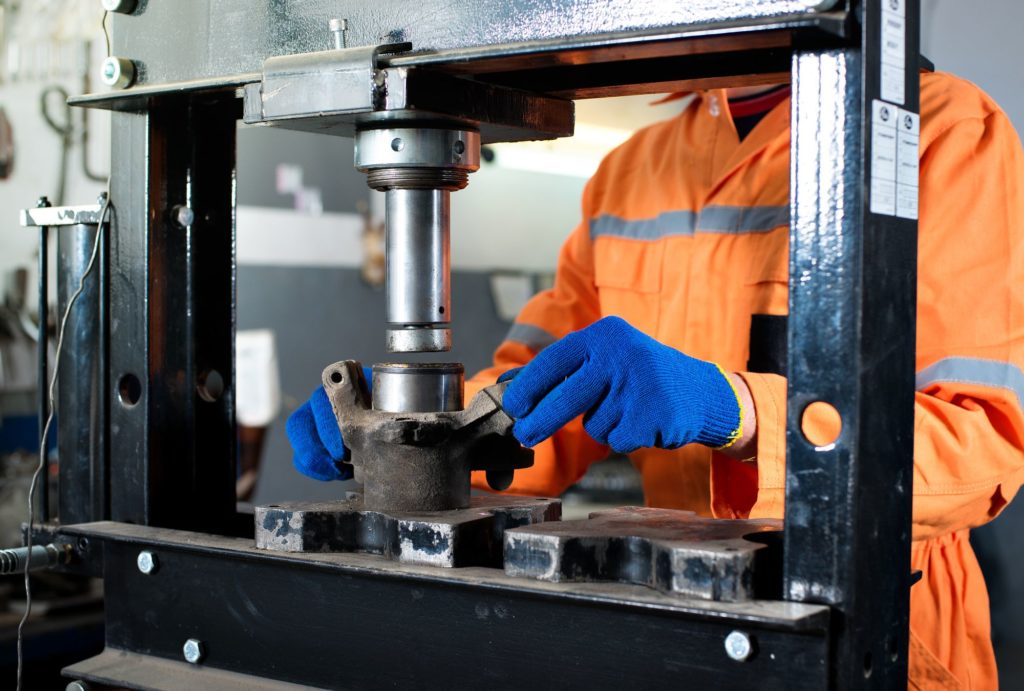
Hydraulic press in the industry
The advantages of hydraulics - why it is indispensable
Hydraulic systems have a number of technical advantages that make them the first choice for many applications. They offer an exceptionally high power density, i.e. a very good ratio between force and size. At the same time, movements can be controlled steplessly and extremely precisely - both in terms of speed and positioning. The systems are robust, durable and designed for continuous operation.
Compared to pneumatics, hydraulics can transmit significantly higher forces, while being more compact and more resilient than electric drives. Safety functions such as load protection, non-return behaviour or emergency lowering can also be efficiently implemented in hydraulic systems.
Quality is crucial: What matters in practice
The performance of a hydraulic system depends largely on the quality of its components and professional implementation. Even at the planning stage, it is crucial to correctly dimension pressure ranges, flow rates and installation conditions. During installation, lines must be laid stress-free, screw connections tightened correctly and filters positioned carefully.
Cleanliness is a factor that is often underestimated. Even the smallest particles in the oil or in the line can cause damage to pumps, valves or cylinders. The cleanliness level of the fluids is therefore a key quality factor during production and commissioning. Further information can be found in our technical article on the topic of oil cleanliness in hydraulic systems.
Conclusion: Understanding hydraulics - gaining efficiency
Hydraulics is a key technology in modern industry. It enables powerful, precise and durable motion control and is the backbone of reliable performance in many machines and systems.
The HBT GROUP offers customized hydraulic solutions, from individual hoses to complete power units. At our six locations in Germany and Latvia, we develop and manufacture components and systems for professional use. We combine many years of experience with state-of-the-art production technology and a high level of vertical integration.
Our range of services includes the assembly of high-quality hydraulic hoses, precise pipe bending technology, pre-assembled hydraulic assemblies and comprehensive services - including leak tests, repairs and on-site maintenance of hydraulic systems. For industrial customers, we also offer KANBAN-based supply concepts that ensure efficient material logistics.
Are you looking for a competent partner for your hydraulic solutions? Feel free to contact us and benefit from our many years of experience.