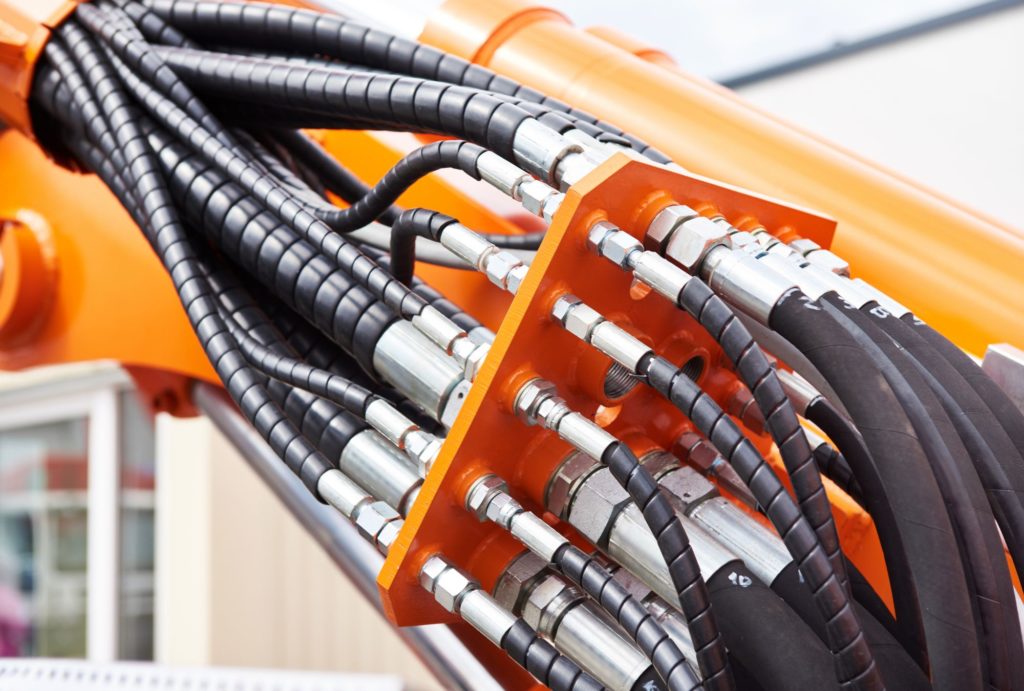
New hydraulic hoses on a hydraulic machine
Quality features at a glance
Hoses are a central element of modern hydraulic machines and systems. They transfer energy in the form of fluid, connect individual components and ensure that hydraulic systems work reliably and safely. At the same time, they are exposed to high loads - pressure, temperature, vibrations and external influences affect the hose lines on a daily basis. This makes it all the more important to pay attention to quality. But how can you actually recognize a high-quality hydraulic hose?
In this article you will find out which quality features are decisive are crucial, what you should look out for when selecting and installing them and why hose lines are often the inconspicuous but critical heart of hydraulic systems.
Why the quality of a hydraulic hose is crucial
In a hydraulic system, hoses are under enormous pressure. In industrial applications, 200 to 400 bar is not uncommon - in certain machines it can even be well over 1,000 bar. At the same time, hoses must remain flexible in order to compensate for movements and dampen vibrations. If a hose is processed inferiorly or used incorrectly, this can lead to dangerous leaks, system failures or even personal injury.
High-quality hydraulic hoses ensure that the entire system works stably and safely. They prevent pressure losses, withstand mechanical loads and remain dimensionally stable even in the event of temperature fluctuations. So quality here does not mean luxury, but safety, efficiency and durability - basic values that are of great importance in every hydraulic application.
Structure and materials - what is important for hose lines
Every hose line consists of several layers, which together determine its strength and flexibility. The inner layer, often made of synthetic rubber or thermoplastic material, is responsible for the tightness and chemical resistance to hydraulic fluids. This is followed by one or more reinforcing layers, depending on the application usually made of steel wire mesh, textile fabricefabric or steelspiralswhich absorb the operating pressure. The outer layer protects the hose from abrasion, UV radiation, oil and other environmental influences.
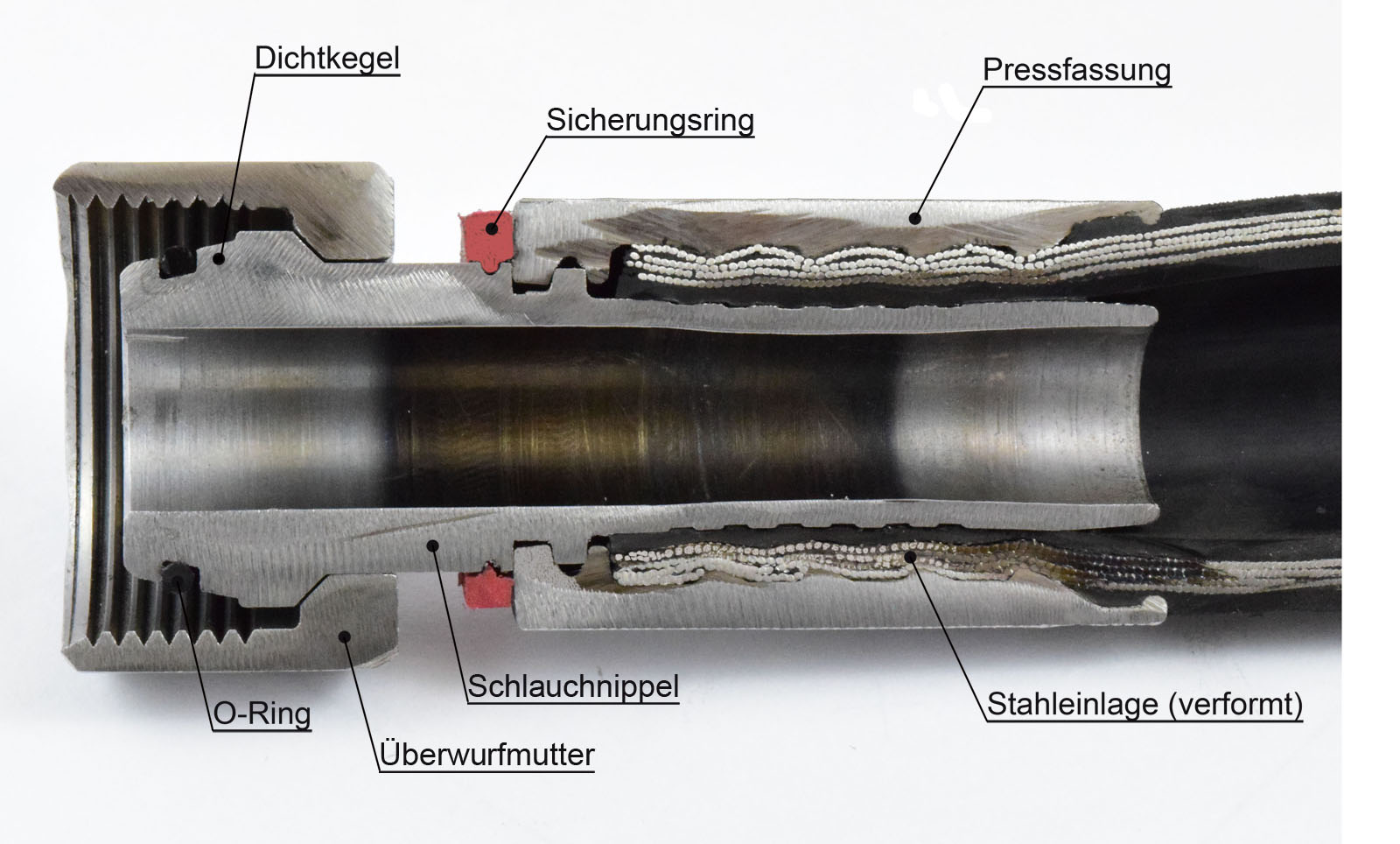
Cross-section of a hydraulic hose
High-quality hose lines in hydraulics are characterized by precisely manufactured connecting elements and tested materials. The fittings that connect the hose to valves, cylinders or pumps must fit exactly and must be neither too loose nor too tight. too tightly fitted too loose or too tight. Only the combination of the right fitting, the right press connection and a tested hose can ensure a permanently tight and secure connection.
Standards, test marks and markings
Compliance with international standards is an important quality feature. High-quality hydraulic hoses generally meet standards such as DIN EN 853, EN 857 or ISO 18752, which define requirements for pressure resistance, temperature resistance and service life. This information is usually printed directly on the hose, together with the manufacturer's name, production date, pressure rating and, if applicable, the hose series.
These markings are not only mandatory information, but also valuable orientation aids. Anyone who knows them can quickly check whether hydraulic hoses are suitable for the intended use. If the relevant information is missing, caution is advised - such hoses often do not meet the required safety standards.
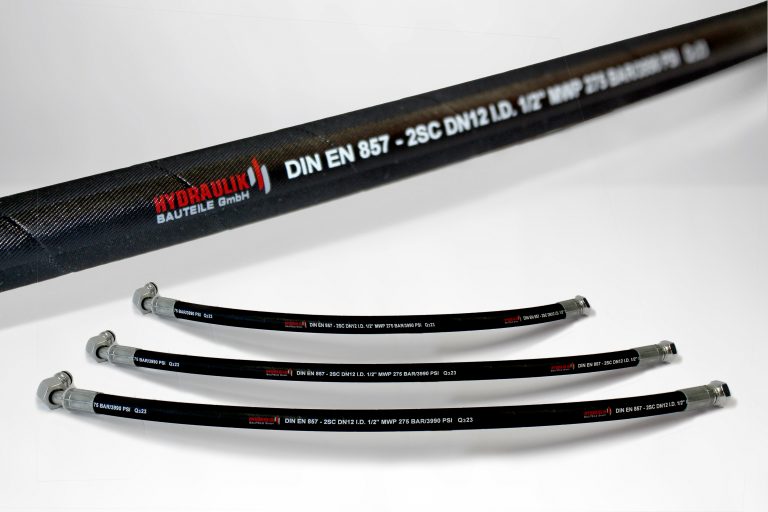
DIN EN 857 marking on HBT GROUP hydraulic hoses
Workmanship and quality of the fittings
A high-quality hose is only as good as the fitting that connects it. The transitions between hose and fitting are frequent weak points in hydraulics. High-quality fittings are made of precision-milled steel or stainless steel and are precisely matched to the hose type.
During assembly, they are crimped with controlled pressure to ensure a permanent, tight connection. Improperly installed or untested fittings, on the other hand, can lead to leaks or hose ruptures. Corrosion resistance also plays a role: in mobile machines or outdoor systems, the materials must be able to withstand moisture, dirt and temperature fluctuations.
Important test and quality features
High-quality hydraulic hoses and hose lines are usually tested for leaks and pressure resistance before delivery. This includes
- Pressure test: The hose is subjected to a test pressure that is higher than the operating pressure to ensure its safety.
- Burst pressure test: The hose is loaded until it fails in order to determine the maximum pressure limit.
- Pulse tests (see our test bench)
- UV testing (ageing simulation)
- Abrasion test
- Bending radius test: Tests whether the hose remains stable even when moving.
- Temperature and ageing resistance: This tests whether the hydraulic hose retains its properties even after prolonged use or under the influence of heat.
These tests ensure that hoses function reliably in practice - whether in mobile machines, stationary systems or demanding industrial environments.
When does it make sense to replace a hose?
Even the best hose does not last forever. Hoses age, become brittle or lose their elasticity. The hose line should be replaced at the latest when the first cracks, abrasion marks or traces of oil are visible. Replacement is also recommended after set operating times or when the hydraulics are modified.
A common mistake is to attempt to repair damaged hoses provisionally. This is not only inadmissible, but also dangerous. A hose line may only be replaced by certified specialists, including the appropriate fittings and pressure test.
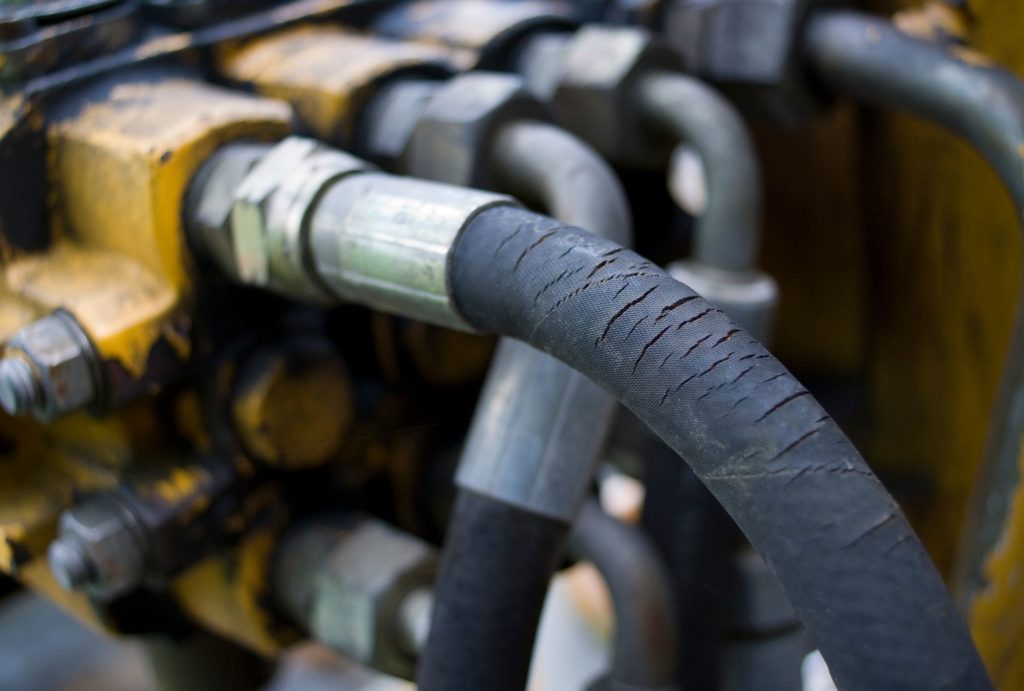
Cracks on a hydraulic hose
Quality pays off - also economically
A high-quality hydraulic hose costs more to purchase than a cheap product, but it pays for itself significantly over its entire life cycle. Fewer breakdowns, less maintenance and a longer service life lead to lower overall costs. It also increases the operational reliability of your machines, which prevents production downtime and consequential damage.
Environmental aspects also speak for quality: Tight hose lines prevent oil loss and thus contribute to environmental protection. So anyone who relies on tested quality for hoses and fittings is not only investing in performance, but also in sustainability and safety. You can find more information on the topic of sustainability in hydraulics in the corresponding technical article.
Conclusion: The right hose makes all the difference
Hydraulics are only as reliable as their hoses. A high-quality hydraulic hose can be recognized by tested materials, clean workmanship, precise markings and perfectly fitting fittings. Standard-compliant hose lines, regular inspections and professional installation are the basis for safe and efficient operation.
The HBT GROUP supports you with many years of experience in hydraulic production and high quality standards. In our hose workshop, we manufacture hydraulic hoses and hose lines precisely according to your requirements - including suitable fittings, testing and documentation. This is how we ensure that your machines work reliably, safely and for a long time.
Are you looking for a competent partner for your hydraulic solutions? Feel free to contact us and benefit from our many years of experience.
Specialist article by:

Lukasz Florkiewicz
Internal Sales Management HBT GROUP
Over 15 years of experience in customer service in the hose line and connection technology sector